
The Fox and the Hen
October 29, 2026
Today’s readings are for Thursday of the Thirtieth Week in Ordinary Time: Ephesians 6:10-20, Psalm 144, and Luke 13:31-35.
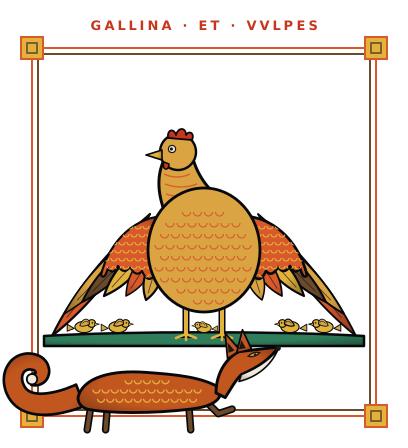
Two animals stand in today’s Gospel. Some Pharisees warn Jesus that Herod wants to kill him. This is the same Herod who beheaded John the Baptist, so it is not an empty threat. Jesus answers: “Go and tell that fox.” Then, moments later, he describes himself as a hen gathering her brood under her wings.
A fox and a hen. Everyone knows how that story ends on a farm. The fox wins. And Jesus chooses the hen anyway, knowing exactly what foxes do.
Augustine: the strength that looks like weakness
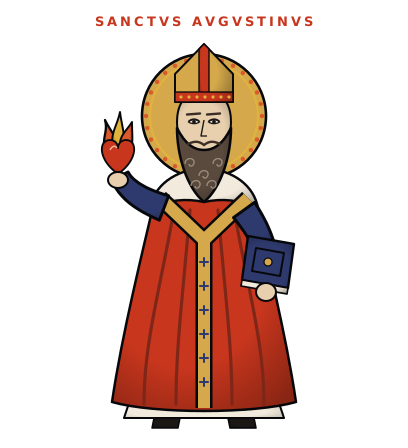
Augustine loved this image because a hen is the one bird that visibly weakens herself for her young. She ruffles her feathers, drops her wings, goes hoarse with clucking. She makes herself ridiculous and vulnerable to cover them. That is the Incarnation. In his homilies on John, Augustine put it in one line: the strength of Christ created you; the weakness of Christ re-created you.
Notice what Jesus does not say. He does not say “I would not.” He says “I yearned to gather you, and you were unwilling.” God’s love does not fail. Our consent does. Augustine knew this from experience. He spent years under those outstretched wings, saying “not yet.”
Aquinas: standing is the harder act
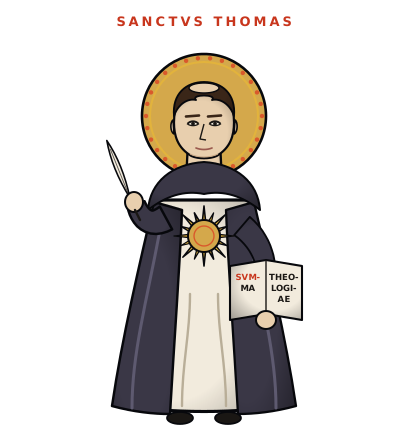
Now turn to Paul. He gives us the armor of God: belt, breastplate, shoes, shield, helmet, sword. But look at the verb he repeats. Not “attack.” Not “advance.” He says stand. Stand firm. Having done everything, stand.
Aquinas explains why. The principal act of fortitude, he argues, is not charging the enemy but enduring him. Endurance is harder, because it means holding your ground against something stronger than you, for a long time, with no immediate payoff. Any man can swing a sword in a burst of anger. Few can stand still under fire.
This is precisely Christ before Herod. “I cast out demons and perform cures today and tomorrow, and the third day I finish my course.” He does not flee and he does not retaliate. He keeps working on his own schedule, and he walks deliberately toward Jerusalem, where prophets die. That is fortitude in its purest form, and Aquinas says its highest act is martyrdom.
Augustine adds the uncomfortable corollary: our life on this pilgrimage cannot be free of temptation, because we only make progress through it. No crown without victory, no victory without combat. If you are fighting, you are not failing. You are in the war Paul describes. The enemy, Paul insists, is not flesh and blood. Your boss, your ex, the culture: none of these is the real opponent. That should humble you and free you at once.
Francis: the knight who found the real armor
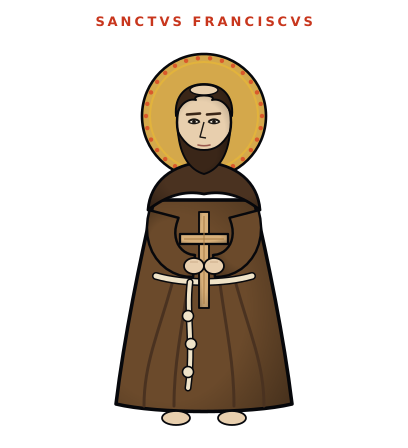
Francis of Assisi wanted to be a knight. He bought the finest armor money could buy and rode off to war for glory. Near Spoleto, the early biographers tell us, he heard a voice asking whether it was better to serve the master or the servant. He turned his horse around and went home, humiliated.
About a year later he stood before the bishop of Assisi and handed every stitch of clothing back to his father. Naked, he took up a different kit: truth, righteousness, the readiness of the gospel of peace. He became the most fearless man in Italy. He walked into the camp of the Sultan during the Crusades, armed with nothing.
Francis wrote in his Admonitions that where there is charity and wisdom, there is neither fear nor ignorance. That is why Jesus can call Herod a fox to his face. Perfect love casts out fear. The armor of God is not a metaphor for toughness. It is what love looks like when it refuses to be intimidated.
Newman: some definite service
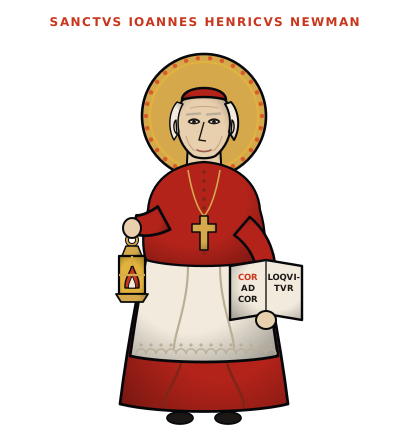
Last, notice how Paul ends. He asks for prayer, not for release, but for courage to speak boldly, “for which I am an ambassador in chains.” An ambassador in chains. He has a mission, and his chains do not cancel it. They are part of it.
Newman wrote that God has created each of us to do Him some definite service, committed to us and not to another. “I have my mission,” he wrote. “I never may know it in this life.” If we are in sickness, our sickness may serve Him; if in perplexity, our perplexity may serve Him.
That is what Jesus means by “today, tomorrow, and the third day.” His course is fixed by the Father, not by Herod. Yours is too. The foxes of this world do not get to set your schedule.
So, today
The hen’s wings are still open. Pray, as Paul says, at every opportunity. Put on the armor. And when the fox comes, as he will, stand.
Blessed is he who comes in the name of the Lord.